Accreditation
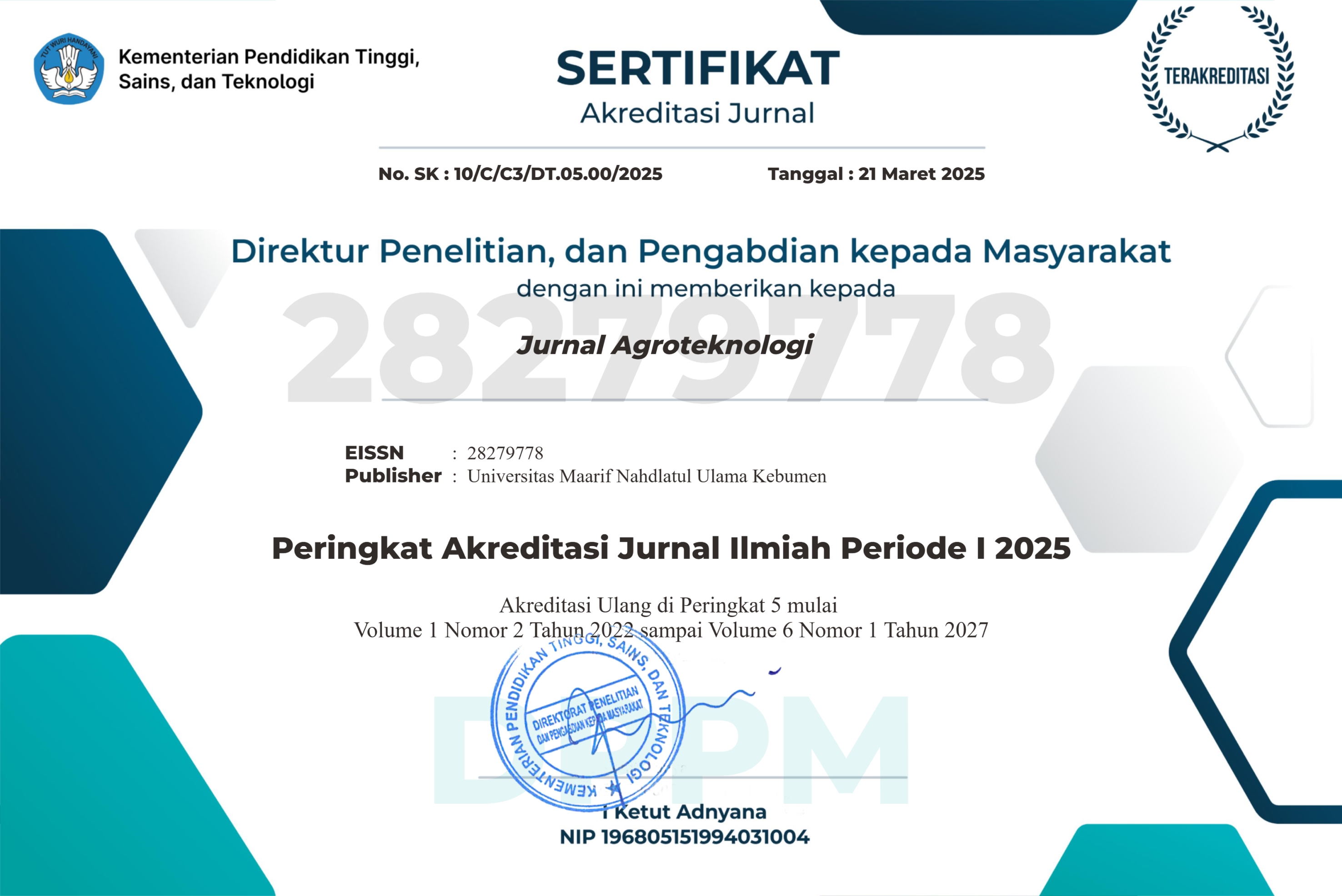

Jurnal Agroteknologi (Agronu) is of the view that scientific discussion after an article has been published is important. Therefore, this journal welcomes comments, criticisms, and responses to published articles, as well as conducting academic debates, as a form of scientific development and maintaining scientific accuracy. This policy explains how readers can participate in discussions and how they are handled.
Purpose
Post-publication discussions provide readers with the opportunity to:
Post-Publication Discussion (Letter to the Editor)
Readers, researchers, and academics can submit comments, criticisms, or discussions regarding published articles.
Submission Format: The discussion must be sent to the Editor, by email to rumahjurnalumnu@gmail.com. Write the discussion message in the body of the text or in the attached file. with the subject "Post-Publication Discussion: [Article Title]".
Academic Criteria: Comments must be scientific, objective, concise, and focus on the specific scientific or methodological aspects of the published paper. Personal criticism or non-academic comments will not be accepted.
Submitted within 12 months of the article being published, unless the letter raises serious concerns about the integrity of the research.
Not to exceed 1,500 words, including references.
Use polite and professional language without attacking certain parties.
Include the full name of the letter author, affiliation, email address, and any conflicts of interest they have (see Conflict of Interest policy).
Handling Procedure
Editorial Assessment: The Editor-in-Chief reviews the letter to determine if it is relevant, substantive, and meets the above requirements. Letters that do not meet the requirements will be rejected and the author of the letter will be notified.
Author's Right of Reply: If a letter is accepted for consideration, the author of the original article will receive a copy of the letter and be given the opportunity to respond.
Decision: The editor decides whether the letter will be published, along with the author's response if available. The letter and response may be edited to adjust the length and clarify the content, with the authors' consent.
Publication: Published letters and responses will be linked to the original article so that readers can follow the entire discussion.
Follow-up
Depending on the content of the discussion, editors can take one of the following actions:
No Further Action: When the discussion is related to differences of scientific opinion. Differences in interpretation are normal in the development of science and are not a basis for making corrections.
Publication of the letter and the author's reply, if the discussion provides added value to scientific debate.
Correction (Erratum or Corrigendum): When the discussion reveals an unintentional error and does not affect the main conclusion of the article.
Expression of Concern or Article Retraction: When the discussion reveals a serious error that undermines the validity of the findings in the article.
Investigation of Misconduct: if the discussion raises concerns about fabrication, falsification, plagiarism, or other forms of violation. These issues are handled based on the journal's policy on Allegations of Research Misconduct.

| Indexing AGRONU |
|
|
|
Reference Tools |
|
|
|
Similary Checker Tools |
|
|
Rumah Jurnal
Universitas Ma'arif Nahdlatul Ulama Kebumen
Jatisari Street KM.05, Kebumen, Central Java, Indonesia.

This work is licensed under a Creative Commons Attribution-ShareAlike 4.0 International License.